





What Is a Crate Engine? A Buyer’s Guide to Crate Motors
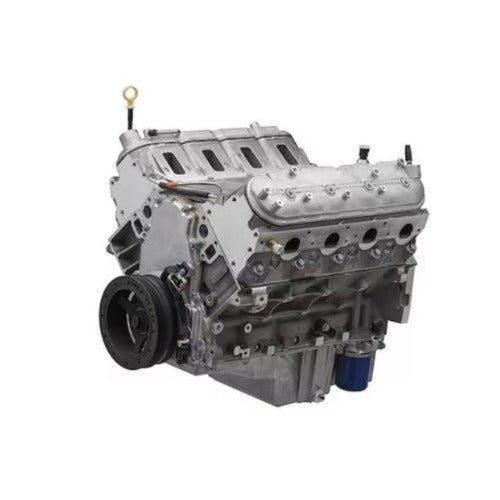
A crate engine is an engine assembled by a manufacturer or engine builder and shipped ready to install, traditionally in a wooden crate, which is where the name comes from. Instead of rebuilding a worn engine or assembling one from parts, you buy a finished engine with a known specification, part number and published horsepower and torque.
Crate engine vs rebuilding your engine
- Known specification: a crate engine has a published horsepower, torque and parts list, so you know what you are getting.
- Less downtime: the engine arrives assembled, so the vehicle is off the road only for the swap, not for machining and assembly.
- Rebuild pros: rebuilding can keep a vehicle’s original, numbers-matching block, and can cost less if the core is in good condition.
Crate engine vs used or remanufactured engine
When you replace an engine, you can buy it new, remanufactured or used, and each comes with different expectations:
- New crate engine: built from new parts to a published specification and part number. Every crate engine on our site is new.
- Remanufactured engine: an original engine core that has been taken apart, machined and rebuilt, usually to factory specification. It suits a like-for-like replacement where a stock engine is wanted.
- Used engine: pulled from another vehicle. It usually costs least, but its wear and history are unknown, so you depend on the seller’s description.
Whichever you choose, match the replacement to the original design unless you are deliberately changing it. Displacement, torque range, cooling, fuel delivery and engine controls decide how the engine behaves under load; see horsepower vs torque for what the ratings mean.
Dressing levels: how complete is the engine?
Crate engines are sold at different levels of completeness, from a long block (block, rotating assembly, heads and valvetrain) up to fully dressed engines with intake, fuel system and ignition. Our guide to long block vs short block vs complete engines explains each level and what you still need to buy.
Popular crate engine families
Small block Chevy (SBC)
The SBC 350 is the classic swap engine. 383 strokers, 396s and 400s add displacement in the same external package. See small block Chevy crate engines.
Big block Chevy (BBC)
The 454, 502, 572 and larger big blocks make more torque but are bigger and heavier than a small block. See big block Chevy crate engines.
SBC vs BBC: which is better?
A small block is lighter, more compact and fits more engine bays. A big block offers more displacement and torque, but needs more room, cooling and a stronger drivetrain. For most street cars an SBC is the easier fit, while a BBC suits builds where torque is the priority and space allows. Our big block vs small block guide explains the differences in detail.
GM LS and LT
The LS3 and other LS engines are the modern swap favorite thanks to their power, compact size and parts support, and the LT4 adds a supercharger. See LS and LT crate engines.
Ford: small block, Coyote and Godzilla
The 302 and 347 small block Fords suit classic Fords, the 5.0L Coyote is the modern DOHC option, and the 7.3L Godzilla is Ford’s big pushrod V8. See small block Ford and Coyote and Godzilla crate engines.
Mopar
BluePrint’s 426 Gen III Hemi and 408 small block Mopar cover Mopar builds; our 426 Hemi engine guide explains the Gen III Hemi. See Mopar crate engines.
What to check before you buy a crate engine
- Fitment: engine mounts, oil pan and sump position, bellhousing pattern, and hood and firewall clearance.
- Carburetor or EFI: EFI engines need an engine controller (sometimes sold separately) and a suitable fuel pump and lines. A standalone ECU is another option; check that it supports your engine’s cylinder count (the Haltech Elite 1500 we list is a 4-cylinder and 2-rotor unit).
- Balance and flywheel: internally or externally balanced engines need the matching flywheel or flexplate.
- Accessories: check whether the water pump, pulleys and front drive are included, or plan an accessory drive kit.
- Transmission and drivetrain: the bellhousing pattern, flywheel or flexplate, and a transmission and axle rated for the engine’s torque.
- Electronics: modern engines need a matching engine controller, harness and sensors, and some listings sell these separately. Check what is included.
- Parts and service support: common engine families such as the small block Chevy, LS and small block Ford have the widest parts support, which keeps future maintenance simple.
- Break-in: plan the first start and first miles before the engine arrives; see how to break in a new engine.
- Legal use: some race engines are sold for competition use only, and emissions rules vary by state. Make sure the engine is legal for how you will use the vehicle.
More reading: what is a blueprinted engine, engine vs motor.
Frequently asked questions
Are crate engines new?
The crate engines from BluePrint, GM Performance and Ford Performance on our site are new engines assembled by the manufacturer. Remanufactured engines are a different product.
How long does it take to install a crate engine?
It depends on the vehicle and the dressing level. A dressed engine replacing a similar engine is far quicker than a swap that needs new mounts, wiring and fuel system work.
How much does a crate engine cost?
On our site, crate engines range from $4,899 for an SBC 350 long block to more than $20,000 for supercharged and high-displacement builds. Every order ships at a flat $75 within the US. See crate engine prices for prices by engine family.
Should I buy a crate engine or a used engine?
A used engine costs less up front, but its condition is unknown. A new crate engine has new parts and a known specification, and a remanufactured engine sits in between. For a modified or higher-power build, a crate engine is usually the simpler choice.
More reading: Horsepower vs torque, How to break in a new engine, Gas vs diesel engines, Crate engine prices, Long block vs short block, roller cam vs flat tappet, compression ratio, best crate engine.
Comments