





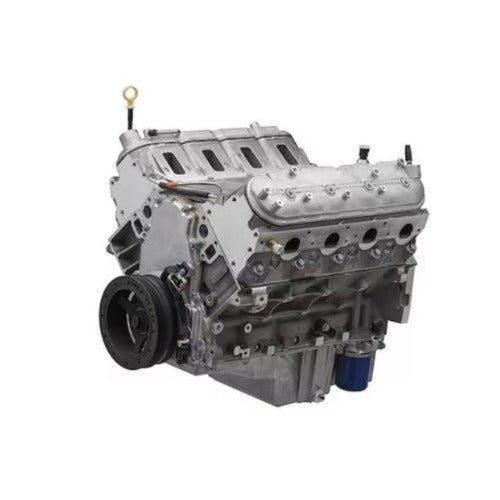
GM LS Engines Explained: LS1, LS2, LS3, LS7, LSA and More
“LS” is the name for GM’s Gen III and Gen IV small-block V8 engines, introduced in 1997 with the LS1 in the Corvette. The family includes aluminum car engines such as the LS1, LS2, LS3 and LS7, iron-block truck engines such as the 4.8, 5.3 and 6.0 liter Vortecs, and supercharged engines such as the LSA and LS9. LS engines share a common architecture, which is why parts, swap kits and crate engines are so widely available.
Main LS car engines and factory ratings
| Engine | Displacement | Generation | Factory rating (typical application) |
|---|---|---|---|
| LS1 | 5.7L (346 ci) | Gen III | 305 to 350 HP (Corvette, Camaro, Firebird) |
| LS6 | 5.7L (346 ci) | Gen III | 385 to 405 HP (Corvette Z06) |
| LS2 | 6.0L (364 ci) | Gen IV | 400 HP (Corvette, GTO) |
| LS3 | 6.2L (376 ci) | Gen IV | 430 HP (Corvette); 426 HP (Camaro SS) |
| LS7 | 7.0L (427 ci) | Gen IV | 505 HP (Corvette Z06) |
| LSA | 6.2L supercharged | Gen IV | 556 HP (Cadillac CTS-V); 580 HP (Camaro ZL1) |
| LS9 | 6.2L supercharged | Gen IV | 638 HP (Corvette ZR1) |
Truck LS engines
GM’s trucks and SUVs used iron-block LS-family engines in 4.8, 5.3 and 6.0 liter sizes, with codes such as LR4, LM7, LQ4 and LQ9, and later aluminum 6.2L versions such as the L92. They are popular budget swap engines because so many were built. Our 6.0 LS engine guide compares the LQ4 and LQ9.
LS engine sizes: 4.8L to 7.0L
Production LS V8s come in six displacements: 4.8L, 5.3L, 5.7L, 6.0L, 6.2L and 7.0L. All of them keep the small block’s 4.400″ bore spacing. The 4.8L uses a short 3.267″ stroke, the 7.0L LS7 a long 4.000″ stroke, and the rest a 3.622″ stroke, so the bore sets the size.
| Size | Cubic inches | Bore x stroke | Common engine codes | Block |
|---|---|---|---|---|
| 4.8L | 293 | 3.780″ x 3.267″ | LR4, LY2 | Iron (trucks) |
| 5.3L | 325 | 3.780″ x 3.622″ | LM7, L33, LMG, LC9 | Iron or aluminum (trucks) |
| 5.7L | 346 | 3.898″ x 3.622″ | LS1, LS6 | Aluminum |
| 6.0L | 364 | 4.000″ x 3.622″ | LQ4, LQ9, LS2, L76, L96 | Iron or aluminum |
| 6.2L | 376 | 4.065″ x 3.622″ | LS3, L92, L99, LSA, LS9 | Aluminum |
| 7.0L | 427 | 4.125″ x 4.000″ | LS7 | Aluminum |
For the 6.0L family (LQ4 vs LQ9, LS2, L76 and L96), read our 6.0 LS engine guide; for the 6.2L, see the LS3 engine guide. New crate engines here include the 6.0L LS364/450 and 6.2L LS3s.
Gen III vs Gen IV LS engines
- Gen III (1997 to about 2007): the LS1 and LS6 car engines and the LR4, LM7, LQ4 and LQ9 truck engines. They use a 24X crankshaft reluctor wheel with the cam sensor at the rear of the block, and most have cathedral-port heads.
- Gen IV (from 2005): the LS2, LS3, LS7, LSA and LS9 and truck engines such as the L92, LY6 and L96. Most use a 58X reluctor wheel with the cam sensor in the front cover (the early LS2 kept 24X), and some versions added rectangular-port heads, variable valve timing or cylinder deactivation.
The generation matters when you swap or mix parts: the engine controller must match the reluctor wheel (24X or 58X), and the intake manifold must match the head port shape. The 6.0L LS364/450 crate engine, for example, uses a 24X reluctor with rectangular-port LS3 heads.
LSX: GM’s performance LS blocks
LSX is the name of GM’s performance LS-architecture blocks and engines, built for higher power than production blocks. The GM Performance LSX 376-B15, for example, is designed for boosted builds. Read more in our LSX engine guide.
LS vs LT engines
GM’s Gen V small blocks, such as the LT1 and the supercharged LT4, are called LT engines. They keep the small-block layout but change enough that most parts do not interchange with LS engines. See our LT4 engine guide for the supercharged Gen V.
| LS (Gen III / Gen IV) | LT (Gen V) | |
|---|---|---|
| Years | 1997 to about 2017 | 2014 onward |
| Fuel injection | Port injection | Direct injection |
| Examples | LS1, LS2, LS3, LS7, LSA, LS9 | LT1, LT4 |
| Swap support | Very large, mature aftermarket | Growing, with fewer budget options |
For most swaps the LS remains the simpler, cheaper choice. The LT is the modern option, and the supercharged LT4 is available as a crate engine. LT swaps often need an LT-specific oil pan, such as the Moroso LT swap pan.
LS crate engines available now
New LS crate engines include the GM Performance LS3 (430 and 495 HP), the 6.0L LS (452 HP), the LSX 376-B15, the sealed CT525, and BluePrint’s LS 376 and 427. See all LS and LT crate engines, or start a custom build with the GM Performance aluminum 6.2L LSA block.
Planning to put one in another car? Read our LS swap guide and see LS accessory drives.
LS3 vs LS7
| LS3 | LS7 | |
|---|---|---|
| Displacement | 6.2L (376 ci) | 7.0L (427 ci) |
| Bore x stroke | 4.065″ x 3.622″ | 4.125″ x 4.000″ |
| Factory rating | 430 HP (Corvette) | 505 HP (Corvette Z06) |
| Oiling | Wet sump | Dry sump (Corvette Z06) |
| Notable parts | Rectangular-port heads | Titanium connecting rods and intake valves |
The LS7 makes more power from more displacement and lighter internal parts, but it is also more expensive and more specialized. The LS3 is the more common and affordable choice for swaps, which is why it is the most popular LS crate engine. For full LS3 specs and comparisons with the LS2, L99 and LT1, see our LS3 engine guide.
More reading: SBC vs LS engines.
Frequently asked questions
What does LS stand for?
GM uses LS as a regular production option (RPO) code prefix rather than an abbreviation, and the name became the common shorthand for the whole Gen III and Gen IV small-block family.
What is the best LS engine?
It depends on the build. The LS3 is the popular all-rounder for swaps, truck 5.3 and 6.0 liter engines are the budget choice, and the LSA, LS9 and LSX-based engines suit high-power builds. Our best LS engine guide matches each LS crate engine we sell to a type of build.
Are LS engines interchangeable?
Many parts and mounts are shared across the LS family, but heads, intakes, crank reluctor wheels, electronics and accessory drives differ between versions, so check compatibility for each part.
What sizes do LS engines come in?
4.8L (293 ci), 5.3L (325), 5.7L (346), 6.0L (364), 6.2L (376) and 7.0L (427). The supercharged LSA and LS9 are 6.2L engines.
What is the difference between Gen III and Gen IV LS engines?
Gen III engines (from 1997) use a 24X crankshaft reluctor and a rear cam sensor. Most Gen IV engines (from 2005) use 58X with the cam sensor in the front cover, and some add rectangular-port heads, variable valve timing or cylinder deactivation.
Related: 6.0 LS engine, LS3 engine, LT4 engine, LSX engine, LS swap guide, big block vs small block, liters to cubic inches, 427 engine, all guides.
Comments